
Art Vs Metallica
I have chosen Metallica Enter Sandman as covered by Art Vs Science on the Triple J morning show, for Like a version. I love the way Art Vs Science projected the song into completely new light through their use of electronic elements and choice of effects. Changes made in the arrangement of their cover version use of vocoding and their swinging jazzy guitar rhythms that take me back to the Classic Beastie Boys Instrumental Album “In Sound from way out”.
In this blog I would like to talk a little bit about the background of Metallica’s Enter Sandman and some of the recording techniques, as this song amongst many others of Metallica’s songs in their back catalogue is truly a masterpiece. I will then compare the 2 song by arrangement and then break down the Art Vs Science talking about each section and the elements within them.
Working with producer Bob Rock for the first time Metallica were seeking a new type of Metal Sound that would connect them with a wider and more mainstream audience, as their previous releases were we too long as told by Kirk Hammett in a interview with Rolling Stone magazine in 1991 “We realised that the general consensus was that songs were too fucking long,”, “I remember getting offstage one night after playing ‘Justice’ and one of us saying, ‘Fuck, that’s the last time we ever play that fucking song!’”. There were no other concepts or creative directions in mind, just simple riff create by Hammett and that they would not be releasing anything until they were 100% happy with their creation. Little to their knowledge, Enter Sandman would essentially be one of the most iconic songs in Metal history to date.
Recorded at Lars Ulrich house in Berkeley California, using a One on One’s SSL and numerous Neve mic pre amps and an array of different microphones (Neumann FET and Shore SM57 to name couple), the band wanted to try a live style of recording, as more of a unit, recording as much together in the same room as possible. Provisions and modifications were made to the room to give it that live sound they were looking for. Hammett used an ESP Strat-style guitar and an ’89 Gibson Les Paul both with EMG pickups, through Marshall Amps and Mesa-Boogie heads. Jason Newstead on Bass Guitar using Ampeg SVT Cabs and through a DI direct to the console. James Hetfield had the most complex of set up on his Guitar using around 11 cabinets stacked, Mesa-Boogie and Marshall being the most mentionable of the arrangement. They were rather particular in their attention to detail on their instruments purely to test the sound, for example they would change the snare drum head after 3 takes, and compare the 2 recordings new to old. With Hetfields guitar they would record from start to chorus, then change the strings, double it from start to chorus, that way the strings would be good by the time they got the end of the song. Mixed down on an SSL 4000 series console at A&M studios in Hollywood, Metallica were set to make Metal History once again in their release of Enter Sandman on the self titled Metallica (Elektra 1991) album, also known to fans as the Black Album.
Art Vs Science
Formed in February 2008, Art Vs Science have truly come a long way in 11 years. After a Daft Punk concert in 2007. Dan Mac convinced his former High School mates, Jim Finn and Dan Williams, to form the group. Jim and Dan were already in a rock punk band called the Roger Explosion. Dan W was also a part of Phillidelphia Gran Jury as well.Supporting artists like Groove Armada and Chemical Brothers Band members James Finn on vocals and keyboards; Dan Mac on vocals, guitars and keyboards; and Dan W on drums and vocals, really are a multitude of talent, receiving numerous ARIA award nominations and winning best Independent release in 2011 for the Album “The Experiment”.
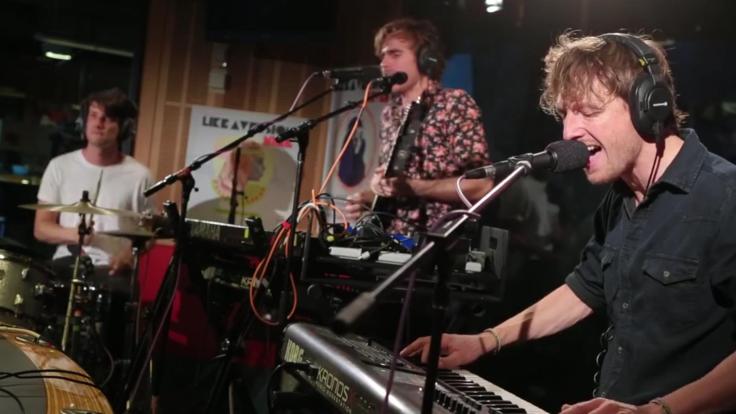
I first encountered Art Vs Science through Triple J unearthed, with their song “Flippers”, when they won the unearthed competition and where given the opportunity to open the Triple J tent at Splendour in the Grass July 2009. I was listening to the broadcast on Triple J and after their set had been aired the announcer Alex Dyson relayed that Art Vs Science had given out flippers to people in the crowd for them to wave in the air when they played their Debut Single “Flippers”. I immediately thought that’s a bit different, nice interaction with their Audience.
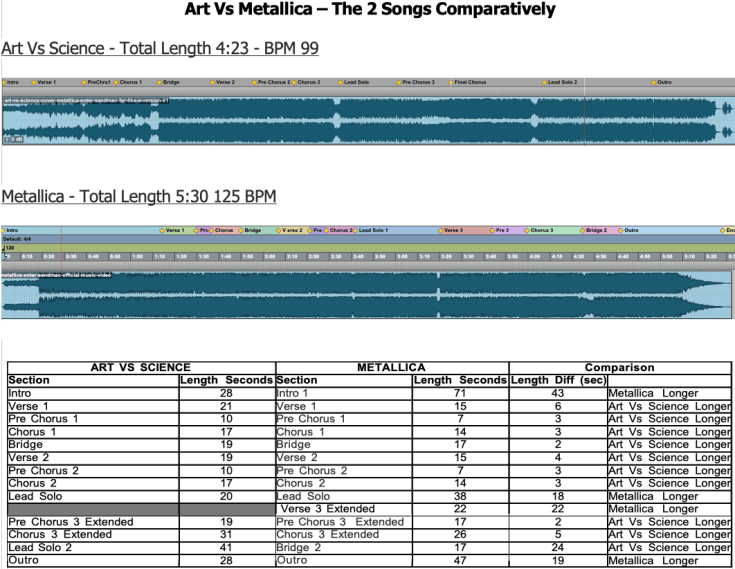
Comparison Summary
- Art Vs Science don’t have a 3rd Verse.
- Intro/Outro are significantly different in length.
- Most sections are basically the same as far as composure goes, however difference in BPM is making a slight timing difference in the length of each section. sections, the composure mostly unchanged.
- Instead of a second bridge Art Vs Science went with a second solo which is indicative of their up beat electronic style, giving their audience something they want to get up and dance to.
- The chords for the rhythm are shared between the Keys and Guitar.
Composure and Effects
Slapstick Funky Style Guitar Chords running through a flanger / wah pedal, heard throughout the bridge and Verses providing us with an up beat style, which is significantly different to the original, this really sets the song on its journey in the art vs science style. James Finn on Keys holds the main riff, which is played as more of bassline synth than a guitar riff. This is one of the ways Art Vs Science have transformed this song into a creature of their own. Noticeable distortion effect on the keyboard, giving it really nice crunch and in a way bridging the gap between 2 genres.
Vocals with some light reverb for most of the Verses and Pre Chorus, Chorus “ Off to Never Never Land”, used on the secondary microphone running through the Yamaha DX21 applying the vocoding effect. I have always been fascinated with vocoding effects, in 2010 I saw Royksopp live at Big day out, they had a robot helmet with a mic which was specifically set up for their vocoding. Swedish electronica outfit, The Knife transform their female vocalist into vocals that are near demonic, nothing like the original recording of the female Vocalist.
At some point in the near future I would like to use some the above mentioned vocoding effects for vocals on one of my projects.
Dan Mac (Lead Vocals Guitar and Keys)
- 2 Microphones, one for Verses and Pre Chorus with some reverb effects applied and a second mic for vocoding (more info below).
- 2 Keyboards a Yamaha DX21 for vocoding and second Korg Kronos 88 for standard chords used in Lead Solo 1 and 2.
- Guitar Fender Stratocaster
James Finn (Backing Vocals and Main Keys)
- 1 Keyboard Korg Kronos 88 which holds the main riff which is relayed as more of a bassline than a riff in this version. One of the changes that makes their cover unique to the original.
- 1 Microphone for backing vocals.
Dan W (Drums) Standard Drum kit. Playing a jazzy rock style of percussion.
Equipment Summary
Throughout their back catalogue Art Vs Science share the roles on stage and in production. However for this cover we have Dan Mac on Vocals Lead Guitar and Keys, James Finn on keyboards and Daniel W on drums.
I searched the internet for information on what equipment the guys from Art Vs Science use, but was limited on any content. So I decided to just message them through their face book page and it was real honour to find a reply from Dan Mac, the following morning with some invaluable information on their vocoding and live performance set up.
“For Vocoding I’ve mostly used a Yamaha DX21 going through a guitar distortion / overdrive pedal into a digitech talker, which does the actual vocoding bit. I’ve also used an electro harmonix V256 but it’s not as digital sounding. Now I’m using a TC helicon voicelive 2 in its “midi notes” feature.”
“We also have two more keyboards going into DIs. These provide the shiney digital to match the amplifier’s grit. And live drums of course. No click track.

These days we use amp simulators instead of real amps live, for convenience, though the sound of those roaring 100W tubes is never far from my heart and maybe we’ll return to it. Keyboard wise. Any shitty keyboard is good enough – in fact, if you come from a guitar background shittier keyboards are probably better as they’ll force you to make them sound good using guitar pedals, which is fun and which will give you something more unique..
Final Thoughts
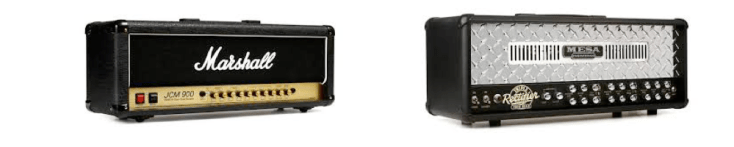
I was quite surprised to see how similar the use of Amplifiers are on comparison with Metallicas choice of equipment. The use of this equipment combined with effects pedals is what gives Art Vs Science the unique sound they produce. I don’t think this was done intentionally for the purpose of the cover version, it’s clearly the choice of many leading artists within the industry.
The Keyboards and Guitar peddle setup that Art Vs Science use is a technique which is being adopted by many different groups throughout the industry, Foster the People for example use multiple peddles to achieve their unique sound heard on most of their back catalogue (“Pumped Up Kicks” and “Helena Beat”), this gives them a unique sound developed over time, from testing various sounds and song writing. Techniques like this are born from us reverting back to our roots or for a better example our analogue roots. Artists wondering what are we all to do with our analogue equipment which has become obsolete by the digital technology of DAW plug ins, problem solved plug them all together and see what sound comes out from it.
Thank you for taking the time to read my blog and a special thanks to Dan Mac from Art Vs Science for the detailed information on their set up and effect processing.
Reference
- https://reverb.com/au/news/producer-bob-rock-looks-back-on-recording-metallicas-black-album
- https://www.deviantart.com/zerolevels/art/Metallica-Enter-Sandman-213801402
- https://en.wikipedia.org/wiki/Enter_Sandman
- https://en.wikipedia.org/wiki/Art_vs._Science
- https://en.wikipedia.org/wiki/The_Experiment_(Art_vs._Science_album)
- https://www.triplejunearthed.com/artist/art-vs-science
- https://www.google.com/
- https://www.allmusic.com/artist/art-vs-science-mn0001511574/biography
 OGB Track Tear Down